Showing posts with label black dropouts. Show all posts

Sunday, November 6, 2016

6 Steps You Must Take to Make Your Child's School Better

Entrenched bureaucracies sometimes change out of enlightened self-interest.  

In other words, they see the light and reform themselves before it's too late, before a more compelling alternative becomes widely available. 

Other times, it takes concerted external pressure to force bureaucracies to change for the sake of their "customers" - the children - as well as themselves.

For far too long, public educators and politicians have kept their heads in the sand, like ostriches, in the face of an urgent need to improve urban and rural schools. 

Therefore, I urge you and other community leaders to keep up the relentless pressure to create straight "A" schools for your children and for every American child.

So regardless of where you live and what your family circumstances are, here's what you must do in order to make sure that your children are well served by their school and placed squarely on the path to academic success:

1. Be vigilant. Make it your business to ask your children what's going on at school. Look for possible trouble spots such as teachers' negative attitudes, tracking, discipline problems, safety issues, and so on. Stay in touch with your kids and pay attention to what they are telling you—and keeping from you.
2. Be informed. Educate yourself about what your children are learning in school and what the school offers. Find out if the work they're doing is grade level or better and whether it meets the academic standards imposed by the states. Familiarize yourself with the standardized tests your children are expected to take, when they must take them, and how they should prepare properly to do well on them. Read up on national and state educational policies and regulations, with an eye to how they will directly affect your children.
3. Be involved. Attend parent-teacher conferences and "meet-the-teacher" nights. Vote in the school board elections and maybe even run for a seat on the board yourself. No one can fight harder than you for your children's right to a good education.
4. Be vocal. Speak up if you see a problem with your child's schooling even if you think there may be repercussions because of your activism. Go to your child's teacher or principal if you detect unfairness in the way your child is being treated. If you feel you, or your child, are being punished for your outspokenness, contact your pastor, the local Urban League, or another community-based organization.
5. Be visible. Make sure the school know that you are actively involved in your child's education. Become involved in the governing process of your local school system. Attend school board meetings and get to know your local elected representatives.
6. Organize. Meet with others to discuss how you can work as a group to help your children. Start on a grassroots level—with neighbors, relatives, friends. Many voices are stronger than one, and work in unison to ensure that achievement matters as much to your children's school as it does to you.

You must be an advocate for your children in school, in the community, and sometimes even within the family. It is your role both to stand up for your and to hold your child accountable.

You must also coach your children through their development. An effective coach teaches concrete skills, pushes an individual to achieve full potential, and is consistently supportive, win or lose."

Children want to do well. When large numbers of them fail, it's because adults—school administrators, teachers, you, and your larger community—have failed them. We all know
it doesn't have to be this way. Bad public schools can be turned around if the adults mobilize to do so; if adults will say: no more excuses for school failure.

I'm not downplaying the problems that many schools and the families they serve face. Just the opposite. While these problems may not go away, they needn't defeat the efforts of you and dedicated educators to close the Preparation Gap and ensure that your children achieve, regardless of your family circumstances.


What steps have you been taking to make your child's school better? 
Leave your comments below. 


Tuesday, November 1, 2016

How to Prevent your Child from Becoming a Dropout

To end Black dropouts, parents must value education and take it seriously. As a parent you just can’t leave the education of your child to the teachers and administrators no matter what type of school your child attends.

Even if you dropped out of high school or didn’t complete college, it is still important for you to be :
  • aware of the school’s curriculum,
  • what expectations the school, especially your child's teachers, have for your child,
  • the school’s standards,
  • the teachers' and the administrators’ qualifications,
  • the school’s rankings,
  • your child’s safety in the schools,
  • whether giving homework is a part of the school’s policy,
  • and whether the school welcome and encourage your involvement.
As a parent, you have responsibility to provide for your child’s food, shelter, and his overall development in becoming a functioning adult in society. Your child’s education is an essential piece of the puzzle. Set the right environment in the home.

Organize your home and your child to make sure that he can balance doing chores, completing homework, associating with his friends, having special times with you, and having fun. Set a good example. Let your child see you reading. Watch educational programs with your child. Have conversations about current events and what's being taught in your child’s classrooms.

Again, take the education of your child seriously. You don’t want your child to get discouraged and drop out of high school. Let them know that not only is this unacceptable.

Tell your child that what is acceptable is for him to apply himself, make the required effort, graduate, and go on to realize his full potential. And, most of all encouragement him and give him your full support.

Leave your comments below. And don't forget to Follow.


Enhanced by Zemanta

Thursday, October 27, 2016

Three Essential Goals of Education No One Talks About

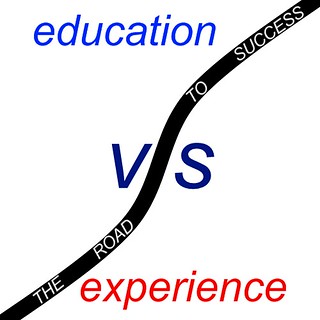
Education vs Experience

The focus is on ending Black dropouts. When dropout factories continue to exist, it begs the question, what are the goals of education.

While I firmly believe that the education of our youth is a local issue and not a federal one, each locality should be clear about their educational goals.

Here I am offering a guide for developing specific educational goals.

1. The goal of a good education is to help young people to become both more receptive to and more discriminating about the world: seeing, feeling, and understanding more, yet sorting the pertinent from the irrelevant with a more discerning touch, increasingly able to integrate what they see and to make meaning of it in ways that enhance their ability to keep on growing.

2. The goal of education is to promote significant learning. Significant learning entails development. Development means successively asking broad and deeper questions of the relationship between oneself and the world. This is for first-graders as well as for graduate students, for fledging artists as well as for graying accountants.

3. The final goal of education in the schools should be to create men and women who are capable of doing new things, not simply repeating what other generations have done ; men and women who are creative, inventive, and discoverers, who can be critical and verify, and not accept everything they are offered.


What are your thoughts. Do you think these goals are realistic?

Leave your comments below.

Thursday, August 25, 2016

Bad Public Schools, Dropouts, and What to do About It

The high school graduation rate in Chicago as of the last full year of available records. (2012-2013) supposedly 63%, which is far from the national rate of 81 %.

However, according to an investigation done by National Public Radio (NPR), the news might not be quite as sunny and cheerful as the headlines would indicate. Graduating more students isn't really a positive accomplishment if the graduates in question are making it out the door on a technicality and are not prepared for either college or a job. And in Chicago, that seems to be the case far too often.

First of all, the "percentage who graduate" isn't accurate if you mislabel a lot of the dropouts.

Basically, we found that many high schools in the city were mislabeling students when they left. They were saying they were moving out of town or going to private schools when, in reality, they were enrolling at the district's alternative schools or, in some cases, GED programs. This makes it look better than it really is because mislabeling those students makes them disappear from the denominator.

But even the ones who stick around and graduate were frequently getting credit for work which was dubious to say the least. Many students achieved the required minimums through "credit recovery." This process allowed students who failed required courses to "retake" the class at home and/or online with limited teacher supervision and far fewer questions to answer.

Plenty of cities are apparently using similar tactics to Chicago. Camden, New Jersey has an interesting optional program for kids who fail their finals. They get to try again with a substantially easier course.

In New Jersey, if you fail the first-round high school exit exam, there's a second exam you can take — an easier one. It's untimed, and it consists of just one single question per subject. In Camden, half the senior class failed not just the first test but the second one too.

In New Jersey as in many states with grad exams, there's a Plan B. There's an appeals
process. And students can submit samples of work they did in class to the state. It can be a single, graded algebra problem or a persuasive essay with a teacher's comments on it.

That "Plan B" was apparently used by nearly 1,500 students in New Jersey alone. Good work if you can get it, as the saying goes, but are these students in any way ready to succeed in either academia or the work force? It doesn't sound like it.

Illinois Policy says that even that story doesn't tell the whole tale when it comes to Chicago.

Unfortunately, these requirements are not rigorous. In fact, students can fail one of four core classes (English, mathematics, science and social sciences) each year and still advance to the next grade level. They also only have to garner just a D in each class they take to earn the 24 credit hours they need to graduate.
        
It's important to remember what a graduation rate doesn't tell us — namely, how prepared the graduating students are for college. On that front, the Chicago Public Schools (CPS) and the Chicago Teachers Union (CTU) are failing miserably.

According to a recent report, 45 percent of CPS graduates begin their senior year not doing well enough academically to attend a four-year college. In the fall after graduation, the most common outcome for these students was to be neither working nor in school.

NPR also showed the opposite side of the coin when they explored the state with the highest graduation rate in the country, Iowa at 90%. There they talk about a number of programs which Iowa has used to keep kids in the classrooms, including free day care, food banks, smaller classes and flexible hours. Those all sound great, and if the districts can manage the funding there's plenty to like about them. 

But at the same time, nothing is ever going to replace a solid home life and parents who make sure that their kids get out of bed in the morning; make sure they make it to school; check on their progress regularly; and, help them with their lessons and discipline them when needed. Maybe there is simply more of that in Iowa?

That would be nearly impossible metric to quantify, but I wouldn't be at all surprised. Government can provide education as a form of supplied services, but they can't force it on anyone. That happens from the bottom up. And for too many kids in Chicago and many other large cities, that's clearly not happening. The sad result is that a lot of those children will never really stand a chance later in life.

Your Thoughts. Leave Your Comments Below.


Tuesday, August 16, 2016

The Need for Equality in Education Still Exist

Now, even after the 60th anniversary of Brown v. Board and the first time students of color became the majority in U.S. public schools - the state of education in Black America today is at a critical juncture. 
The achievement gap between Black children and their classmates continues to widen, and too many students are simply not being equipped with the tools that they need to succeed in a rapidly changing, global society.

Why? Because in areas where Black children are concentrated and poverty is pervasive, we are falling short of providing a high-quality education for them.

Of the 50.2 million students enrolled in public schools in the U.S. today, 16 percent are Black. While our national graduation rate is at 82 percent, the graduation rate for Black students is 57 percent. Those who do reach that graduation milestone are not as prepared as their classmates for learning beyond high school. 

Racial and Socioeconomic Achievement Gap
Upon entering college, only 12 percent of Black students are ready to succeed without taking remediation courses (basic skills courses) that can be so costly they lessen the odds of some students attaining a degree. These are sobering statistics. But if we want to close the racial and socioeconomic achievement gap, we must have a clear understanding of its exact dimensions and contours. 

Tools for Realizing High Standards
Not only do we need to be able to describe the problem, we need to also use our understanding to build tools that meet the challenge of educating all children to high standards. What are those tools?

In K-12 education, the emphasize needs to include the following: access to great teachers who deliver high-quality instruction; high expectations and challenging coursework; and approaches to personalized learning that allow a more tailored approach for students so we can meet their individual learning needs and build on their strengths.

The Single Most Important Quality of a Great School
The recent New Education Majority national poll of parents and families of color suggests that parents agree. It showed that Black parents overwhelmingly consider good teachers to be the single most important quality of a great school, and that they their young-sters should be challenged more in school to help ensure they are successful later in life.

Today, more than ever before, education doesn't end with high school. A post secondary degree or credentials offers the surest course to career opportunity and individual success in life. We need to make college more personalized and flexible to meet the needs of today's students, who are more diverse than ever. Many are working full-time, while others are raising kids or returning to school at an older age.

Why Some Students Drop Out
Georgia State University, for example, analyzed millions of student to try to learn why some students were dropping out. They found that a low grade in the first course in a student's major can signal trouble. The university gets an alert when students earn a C or lower in the first course tied to their major - and students get more support. It's one of the data-driven steps that helped Georgia State double the graduation rate for Black students and triple the rate for Hispanic students over the last decade.

Georgia State University, among other institutions, is facing the issue of educational inequity head-on and proving that it is not intractable or inevitable. The real question is, do we accept it in our country? Are we going to accept a system that sets students on different trajectories based on the color of their skin or the language they speak? Can we sit comfortably knowing that future leaders and great minds are sitting in classrooms today and not receiving the quality education they deserve?

Absolutely not. We cannot accept the status quo. It is time to look closely at approaches suggested by the data, listen to families and commit to implementing real solutions in our schools and communities.

Throughout history, Black people have always prioritized and fought for educational opportunities. Since the time when slaves learned to read and write despite the threat of physical danger that could result, through the battle for equality in our schools and Brown v. Board, the fight for opportunity through education, no matter the risks, is a part of our nation's story.

Your Thoughts. Leave your comments below.


Thursday, May 12, 2016

11 Signs that Your Child's School Welcomes Parents

Parent involvement is a key factor in dropout prevention. 

Lack of parent involvement should be considered a significant risk factor leading to teenagers dropping out of high school. 

Conscientious teachers and school officials should encourage parent involvement and make the school inviting to all parents.  

Here are 11 characteristics you might see in a school that is serious about parental involvement:
  1. Keeps parents up-to-date (via a bulletin board, Web site, hot line, or news­letter) about upcoming school events, personnel changes, volunteer oppor­tunities, etc.
  2.  Informs parents about important changes under consideration before putting them into effect.
  3.  Encourages parent-staff committees to weigh in on decisions that signifi­cantly effect the school (e.g., budget, curriculum, teacher hiring).
  4.  Holds frequent events (such as open-house nights) where parents and teach­ers can meet, talk, and swap information.
  5.  Provides phone numbers or e-mail addresses where parents can reach teachers.
  6.  Supports an active parent-teacher group (PTA or PTO).
  7.  Invites parents to observe children's classes.
  8.  Greets mothers and fathers warmly; treats them in a courteous manner when they ask questions.
  9.  Invites parents to make suggestions and evaluate the job that the school is doing, through surveys or direct communication with staff.
  10.  Provides clear written information about school rules and procedures.
  11.  Explains things to parents in everyday English, not jargon you can't under­stand. 

Do your child's school encourage your involvement. Let me know. 

Tuesday, April 5, 2016

What You Need to Know About the Failing Chicago Public Schools

In major cities across America, public school students are entering their adult years far behind the curve. But nowhere is the crumbling of a major public school system more evident than in the city of Chicago.

Recently, one school's prom slogan showed in just four words how far Chicago Public Schools has fallen. That Spring, just like high schoolers at schools across America, students at Paul Robeson High School planned their prom festivities. They picked dresses, tuxes, corsages and boutonnieres. 

Signs of a Bad Public School System
But before all of that, they picked a theme: "This Is Are Story." It's an error, and an obvious one -- but it's no laughing matter. It's just the latest sign of how badly Chicago's public schools are failing the city's students. 

Consider this:
  • Four out of 10 CPS freshmen don't graduate.
  • 91 percent of CPS graduates must take remedial courses in college because they do not know how to do basic math and other schoolwork.
  • Only 26 percent of CPS high school students are college-ready, according to results from ACT subject-matter tests.
Youngsters not Prepared for Graduation
In reference to the youngsters that do graduate, the requirements are not rigorous at all. In fact, students can fail one of four core classes (English, mathematics, science, and social sciences) each year and still advance to the next grade level. They also only have to garner just a D in each class they take to earn the 24 credit hours they need to graduate.

It is important to remember what a graduation rate doesn’t tell us -- namely, how prepared the graduating students are for college. On that front the Chicago Public Schools and the Chicago Teachers Union is failing miserably.

According to a recent report, 45 percent of CPS graduates begin their senior year not doing well enough academically to attend a four year college. In the fall after graduation, the most common outcome for these students was to be neither working nor in school. Education should be the great equalizer; but in Chicago, public education is more of a holding cell than a launch pad.

Black Youngsters Used as Pawns
The prom slogan mentioned above is especially sad when you consider which school it comes from: Paul Robeson High School is located in the Englewood neighborhood of Chicago -- one of the poorest, most violent neighborhoods in the city. There have been 156 murders in Englewood since 2007. The average per capita income is $12,255, and 23.6 percent of residents are unemployed.

And as things stand, Paul Robeson students have little reason to hope for change. They are some of the same students who, as underclassmen in September 2012, were used as pawns by the Chicago Teachers Union during a week long strike.

During this teacher contract battle, the CTU and it's members walked out on about 400,000 students at 675 schools. For that week, students and their families were left scrambling -- for daycare, for meals, for a safe place to spend the days or trying to get off work so students weren't unattended. Not to mention, they weren't learning.

This fight wasn't waged over students; it was a power struggle about how much grown-ups get paid. Chicago Teachers Union President Karen Lewis and other union leaders waged a war that locked students out of classrooms over pay increases and refusal to implement a more rigorous teacher evaluation processes.

I will talk about this recent CTU strike in my next post.

What do you think about this situation. Leave your thoughts below. 


Monday, November 2, 2015

Superb Ways to Prevent Dropouts

We cannot afford to shortchange our youngsters intelligence.  When you, as a teacher, make your
classroom interesting and challenging, you show that you are interested in the child intellectual advancement and the child's effort will reflect that.

And, as a child goes through his elementary grades and advances to high school, that high school must find ways to individualize the education of the youngsters and show the child that their presence in the classroom is important. Indeed, the whole climate in the school must reflect that for all the students.

The school must not only teach basic subjects, but also be flexible enough to have the child pursue personal interests either in or out of the classroom and get credit for doing so. The youngsters who created the app for dealing with police brutality are to be commended just as much or more so than the youngsters who excel in basketball or football..

We must recognize our children not only for their athletic prowess, but also for their intellectual accomplishments.  This gives an equal recognition and consideration to both and when children know that their individual efforts are being appreciated and praised you will get more of that type of effort. Always keep this in mind. It will go along way towards preventing dropouts.


What would you like to add to these ways? Leave them below.

Tuesday, January 7, 2014

Students Taking Control Of Their Education

It is significant when students take the quality of their education in their own 
hands. Here's what a group of students with the help of Students Matter 
recently did in California to make a difference.  Read this lawsuit and 
follow this case closely.

OVERVIEW
Students  Matter  is  a  national  non profit  organization  dedicated  to  
sponsoring  impact litigation to  promote access to quality  public  education. 
Students  Matter’s  first  case is Vergara  v.  California, a  statewide education 
equality lawsuit filed by nine California public school  students from districts 
around  the  state.

Vergara  v.  California seeks to  strike  down  the  outdated  and  harmful  
state  laws preventing California  from  embracing  a  teacher  career  system  
that elevates teacher  quality,  raises  the prestige of  the  teaching  profession 
and  promotes  equal access  to  quality education  for  all  students

Why  California?
Students  Matter chose  to  sponsor  its  first  case against  the  state  of  
California  because California  public  schools  have  fallen inexcusably far  
behind  the  rest  of  the  nation, both in academic achievement  and in  progress 
toward  embracing  proven  ways  of  raising  student success

Why  focus  on  teachers?
Students  Matter  believes  in  the  power  of  a  good  teacher. Research  
shows  that  quality teachers make the difference not  only  in  students’  
academic performance  but  also  in lifetime  achievement. Quality  teachers  
are  the  foundation  of  a  quality education. Yet,  five state  laws  in  California  
restrict  access  to  quality  teachers, particularly from our most vulnerable  
students who  need  quality  teachers  the  most.    

Why  litigation?    
When  specific  laws violate  the fundamental,  Constitutional  rights of  our 
children, the  judicial system is the  only  way  forward.  The courts offer  
a unique opportunity to put politics and rhetoric aside, focus on the  facts,  
and do what is truly best for students.

For more information on go to: Students Matter 


info@studentsmatter.org
@Students_Matter
FIRST CASE
With  the  help  of  Students  Matter,  n
ine  California  public  school  students
from  districts  around  
the  state
filed  
Vergara  v.  California
against  the  State  of  California
in  May  2012.
In  May  2013,  
the  stat
e’s  two  largest  teachers  unions,  
the  Califor
nia  Teachers  Association  and  the  California  
Federation  of  Teachers,  
intervened  in  the  case  to  defend  the  statutes
.  
The  
California  Superior  Court  for  Los  Angeles  County  has  allocated  
four  full  weeks  for  the  
Vergara  v.  California
trial,
beginning  on  January  27,  2014.  
By  removing  outdated  barriers  to  progress,  
Vergara  v.  California
will  create  an  opportunity  for  
all  integral  education  stakeholders
to  come  together  to  create  a  modern,  fair  and  empowering  
teacher  career  system.
The  case  
challenges  five  statutes  of  the  Education  Code
that,  separately  and  together,  
push
some  of  our  best  teachers  out  
of  the  classroom  and  entrench
grossly
ineffective  teachers  in  our  
schools,  
creating  
an  arbitrary,  unjustifiable  and  unconstitutional  inequality
among  students:
•
Permanent  Employment  Statut
e,
which  effectively  guarantee
s
all  teachers  
permanent  employment  after  only  18  months  on  the  job  a
nd  meaningless  evaluations
;
•
Dismissal  Statute
s,
which  create  a  nearly  insurmountable  set  of  obstacles  for  school  
administrators  to  dismiss  a  single  ineffective  teacher;  and
•
Last
-­‐
in,  First  Out  Statute,
which  forces  school  districts  to  make  decisions  about  
district
-­‐
wide  layoffs  and  subsequent  reassignments  based  solely  on  teacher  seniority,  
with  no  consideration  for  performance  in  the  classroom.  
TEAM
Founder
:
S
tudents  Matter  founder  
David  F.  Welch  currently  serves  as  
the  President
of
a  high
-­‐
tech  company  in  Silicon  Valley
.  
Dave  is
a  parent  of  three  children
and  
has  been  engaged  with  
bringing  positive  change  to  
public  education  for  more  than  a  decade
.
Legal
:
Theodore  B.  Olson
,
Theodore  J.  Boutrous,  
and  Marcellus  McRae,  
partners  at  Gibson,  
Dunn  &  Crutcher,  head  the  legal  team  for  Students  Matter.  A  former  U.S.  Solicitor  General,  Mr.  
Olson  has  twice  received  the  U.S.  Department  of  Justice’s  highest  award  for  public  service  and  
le
adership.  Mr.  Boutrous  has  been  named  one  of  the  100  best  lawyers  in  California  for  
eight
consecutive  years.  
Prior  to  joining  Gibson,  Dunn  &  Crutcher,  Mr.  McRae  served  as  an  Assistant  
U.S.  Attorney  in  Los  Angeles.  
Combined,  Mr.  Olson  and  Mr.  Boutrous  have  
argued  
over  
60  cases  
before  the  U.S.  Supreme  Court
,  most  recently
,  
the  federal  challenge  invalidating  California’s  
prohibition  on  same
-­‐
sex  marriage,  Proposition  8
.  
Communications
:
The  issue  advocacy  firm  G
riffin|Schein  manages  all  communications,  
coaliti
on
building  and  strategy  for  Students  Matter.
Griffin|Schein
develops  and  manages
issue  
advocacy  campaigns
for  
leading  foundations,  
nonprofit
organizations  and  philanthropists
and  
specializes  in  communications  around  impact  litigation.  Most  prominently,  
Griffin|Schein  
developed  and  executed  
the  communications  
s
trategy  supporting  the  marriage  equality  lawsuit  
that  struck  down  California’s  
Proposition  8  
and  
the  advocacy  campaign  
for  gun  violence  
reduction  
employed  by  Sandy  Hook  Promise  in  the  wake  of  the  Newtow
n  school  sh
Enhanced by Zemanta